


Alison Hopper, MEI’s Primary Maths and Key Stage 3 Transition Specialist, explores the oracy practices that can enhance mathematical learning and understanding for all pupils.
The Secretary of State for Education recently called for oracy to be ‘hardwired’ into the revised National Curriculum. For maths teachers, effective classroom talk and listening are already central to good pedagogy.
Why oracy is important in maths classrooms
There is huge progress being made in encouraging oracy and purposeful talk in mathematics classrooms. Expert organisations including the NCETM, Voice 21, and Oracy Cambridge highlight oracy as a vital component in effective teaching and learning. People use language, both internally and with others, to make sense of the world. This includes the mathematical world: linguistic representations of mathematical structure intersect concrete, pictorial and abstract representations to support and develop deep, connected and sustained understanding of mathematics.
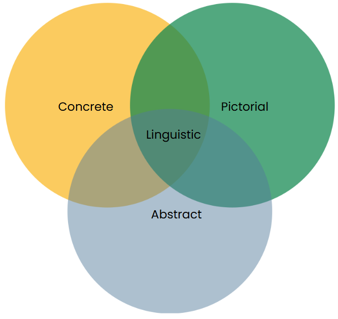
Figure 1: Linguistic representations of mathematics to connect other representations
Oracy is more than teacher questioning
Teachers knowing the importance of speaking and listening in maths classrooms is a necessary start in creating an environment where oracy sits in the centre of effective student learning. When I lead Professional Development sessions with an ‘oracy in the maths classroom’ focus, (and most of my other sessions concerning maths pedagogy too!), I quote a sentence from the evaluation of a Maths Hub Research Innovation Work Group focused on oracy:
The more students understood the purpose of their talk, the more purposeful their talk became’
Maths Hub Research Innovation Work Group
The quote led me to reflect on this question: Do teachers and the students really understand the purpose of classroom talk, and do they all make the most of it?
Christine Howe and colleagues’ research into the impact of teacher-student dialogue on students’ outcomes identifies five themed characteristics that verbal interactions in classrooms should display:
- Asking open questions,
- Making extended contributions,
- Acknowledging and exploring differences of opinion and their reasons,
- Pursuing integrated lines of inquiry through making explicit links between contributions,
- Adopting a metacognitive perspective – participants aware of its value and reflecting accordingly.
(Howe, et al, 2019)
In the classrooms I have been lucky enough to visit, I have seen much good practice around themes 1 and 2. My questions focus on the other themes. Do teachers feel they can and should take the time to engage with themes 3, 4 and 5? Does the perceived pressure of having to ‘get through’ the curriculum mean that we are unable to make the most of those extended contributions and to develop them further? Do we do this better in other subjects?
Orchestrating oracy
Jane Hawkins, Associate Deputy Director for Secondary Mathematics at the NCETM, refers me to Stein’s ‘Five Practices for Orchestrating Productive Mathematics Discussions’ (NCTM, 2019). Stein’s practices, Anticipating, Monitoring, Selecting, Sequencing and Connecting students’ responses, provide a link from themes 1 and 2 into themes 3 and 4 (Howe et al, 2019). The focus on mathematical talk through the use of stem sentences, sentence prompts and talk frames helps teachers increase their expectations of extended responses and contributions from students. Teachers also need to develop how they work with and shape these responses to ensure that students understand why creating and articulating mathematically rich oral responses supports and deepens their learning.
Voice 21s six ‘Talk Tactics’ (2022) are widely and successfully used in schools to support students to engage in talk. The prompts encourage students to Instigate, Probe, Challenge, Clarify, Summarise and Build through their contributions, and give sentence starts to facilitate structure. To me they fall into two categories:
| Group 1 | Group 2 |
| Instigate, Challenge, Build | Summarise, Probe, Clarify |
Talk Tactics in Group 1 are the ones I have observed most frequently used by students. These tactics allow students to contribute to the discussion without necessarily referring back to what others have said, giving the opportunity for students to ‘say what is in their head’ without having listened to and engaged with what has come before.
The tactics in Group 2 are about engaging with the contributions of others and therefore require students to have listened to those previous contributions. Do students use these three tactics as much as they use those in Group 1? How do we encourage students to engage more deeply with what they hear from others? How do we make them aware that it is by listening, sequencing and connecting contributions that we can develop and deepen our own understanding?
‘If an answer doesn’t give rise to a new question from itself, it falls out of the dialogue’
(Bakhtin, 1986)
To develop more Group 2 tactics in classrooms, teachers can first model them by explicitly summarising what they have heard, seeking clarification or asking a follow up probing question. Teachers can then encourage this from other students, first in response to their own contributions and then in response to the contributions of other students. By setting an expectation that students should seek clarification, probe and summarise talk, this culture can be established in the classroom. Modelling responses such as, ‘Oh, so you mean …’ or, ‘Ah, I hadn’t thought about it like that before,’ gives students permission to alter their thinking in response to discussion and dialogue with others. Teachers and students can then summarise the learning, making reference to the discussion that has happened over the course of the lesson and perhaps beyond. Teachers create an environment where students understand that having contributions questioned is an important part of developing and deepening both their own understanding and that of others.
Oracy and equity
There is evidence that oracy can help address the disadvantage gap and create a more inclusive classroom culture (Knight, 2024). The Oracy All Party Parliamentary Group asserts that ‘the children and young people who would disproportionately benefit from oracy education and are hit hardest by its absence were our main motivation’, (2021, p. 5). This is supported by Oracy Cambridge: ‘[Oracy] has the potential to help eradicate gaps in education outcomes and life chances that blight so many lives, cost society so dear and that have defeated our education system for 150 years.’ (Dawes and Dudley, 2019).
At MEI, we have built in oracy in mathematics across our work with schools, colleges and through our partnership with the NCETM. Whilst there are inevitable contextual and resource challenges to be faced, there is an overwhelming recognition that our oracy work is vital and has a positive impact on students’ mathematical understanding.
If you do one thing in your classroom tomorrow, or indeed in a session with teachers, don’t allow a contribution to fall out of the dialogue (Bakhtin, 1986). Make a point of acknowledging, sequencing and connecting responses to show how they are a valuable part of learning (Stein, 2018). Model the purpose of oracy – both speaking and listening – as powerful tools to develop and deepen mathematical understanding.
References
Bakhtin, M.M. (1986) Speech Genres and Other Late Essays. Austin, TX: University of Texas Press.
Dawes, L. and Dudley, P. (2019) ‘Oracy is here to stay. Here’s why.’ Available at: https://oracycambridge.org (Accessed: 15 October 2026).
Howe, C., Hennessy, S., Mercer, N., Vrikki, M. and Wheatley, L. (2019) ‘Teacher-student dialogue during classroom teaching: does it really impact upon student outcomes?’, Journal of the Learning Sciences, 28(4-5), pp. 462-512.
Knight, P. (2024) ‘Oracy and cultural capital: the transformative potential of spoken language’, Literacy, 58(1), pp. 3-12.
Oracy All-Party Parliamentary Group (2021) Speak for Change: Final Report and Recommendations from the Oracy All-Party Parliamentary Group Inquiry. London: Oracy APPG.
Stein, M.K. and Smith, M.S. (2018) The Five Practices for Orchestrating Productive Mathematics Discussions. 2nd edn. Reston, VA: National Council of Teachers of Mathematics.
Voice 21 (2022) Talk Tactics. London: Voice 21. Available at: https://voice21.org (Accessed: 15 October 2026).